Introduction
Waiting for your government exam result can be one of the most anxious phases of the recruitment process — but knowing exactly how and where to check it, and what steps typically follow, can make the process much less stressful. This guide walks through how to check your government exam result 2026 step by step, covering score cards, merit lists, cut-off marks, and the practical next steps once your result is declared.
Whether you're checking an SSC exam result, a banking exam score card, a railway exam merit list, or a state PSC final result, the underlying process is broadly similar across most recruiting bodies, with a few organisation-specific variations covered below.
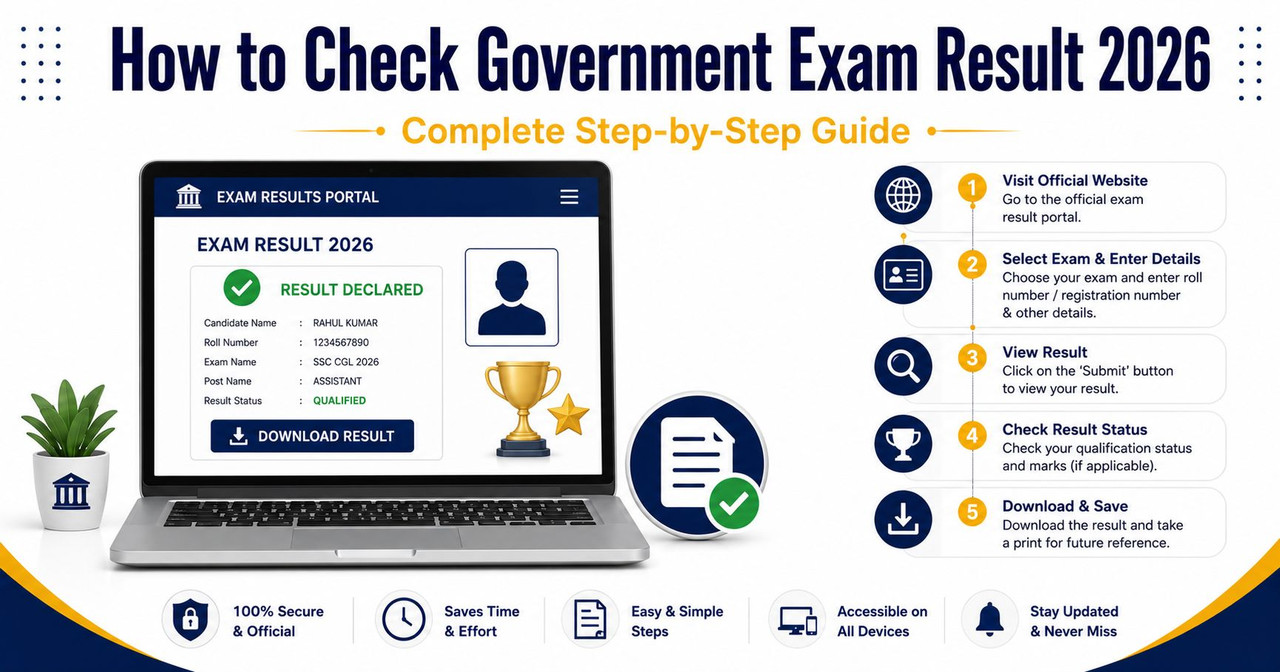
Step-by-Step: How to Check Your Government Exam Result
Step 1: Visit the Official Website of the Recruiting Body Always check your result directly on the official website of the conducting authority — never rely solely on third-party or aggregator websites, since these can occasionally publish delayed, incorrect, or unofficial information.
Step 2: Locate the "Result" or "Score Card" Section Most recruiting bodies publish results under a dedicated "Results," "Latest Updates," or "Recruitment" section on their homepage, often accompanied by a press release or official notice announcing the result declaration date and stage (Prelims, Mains, Final, etc.).
Step 3: Enter Your Login Credentials Depending on the recruiting body, you'll typically need:
- Roll Number + Date of Birth
- Registration Number + Password
- Application Number + Date of Birth/Password
Step 4: Download and Save Your Score Card Once your result is displayed, download and save the PDF score card or result document. This typically contains your marks/score, category, qualifying status, and (for shortlisting stages) whether you've cleared the cut-off for the next stage.
Step 5: Check Cut-Off Marks Alongside Your Result Recruiting bodies usually publish category-wise cut-off marks (General, EWS, OBC, SC, ST, PwBD) alongside or shortly after the result. Compare your score against the relevant cut-off for your category to understand exactly where you stand, especially at shortlisting stages like Prelims or Tier-1.
Step 6: Note the Next Stage Details If you've qualified, the result page or an accompanying notice will typically specify the next stage — Mains exam, Skill Test, Document Verification, Medical Examination, or Interview — along with tentative dates. Keep track of this timeline closely, as subsequent stages often have short notice periods.
Types of Government Exam Results — What They Show
- Prelims/Tier-1 Result: Usually a qualifying-stage result (pass/fail based on cut-off) rather than a detailed score, since Prelims marks in many exams (like UPSC CSE) are not counted toward final merit
- Mains/Tier-2 Result: Typically includes detailed marks, category-wise cut-offs, and confirms candidates shortlisted for the next stage (Skill Test, Interview, or Document Verification)
- Final Result/Merit List: The final selection list, usually combining marks from all stages, sometimes accompanied by a separate category-wise or post-wise merit list
- Score Card (Banking Exams): Detailed section-wise and overall marks, often issued regardless of qualifying status, useful for candidates to gauge their performance even if not selected
What to Do After Your Result Is Declared
If You've Qualified:
- Note the next stage and its tentative timeline immediately
- Begin gathering required original documents for Document Verification (educational certificates, category certificates, ID proof, photographs) well in advance
- If the next stage is an Interview or Skill Test, start focused preparation right away rather than waiting for the official call letter
- Keep checking the official website regularly, since many recruiting bodies don't send individual notifications for every subsequent stage
If You Haven't Qualified:
- Review your score against the published cut-off to understand the gap
- Check if a revised/updated result or cut-off is expected (occasionally issued after RTI queries or legal challenges)
- Use the detailed score card, where available, to identify which specific sections need improvement for your next attempt
- Track the next recruitment cycle's notification dates so you don't miss the following year's application window
Common Result-Checking Mistakes to Avoid
- Relying only on unofficial sources for the result date: Always confirm exact result declaration timing from the official website or verified official social media handles, not rumours or unconfirmed forwards
- Not saving your score card immediately: Some result portals have limited-time availability windows — download and save your score card promptly rather than assuming it will remain accessible indefinitely
- Missing the next-stage document checklist: Many candidates qualify a stage but then scramble for documents at the last minute — prepare your document folder well before Document Verification, not after receiving the call letter
- Ignoring provisional result disclaimers: Some results are marked "provisional," meaning they're subject to final verification — read any accompanying notice carefully rather than assuming provisional status equals confirmed selection
Get Instant Government Job Alerts
Never miss a notification, admit card, or result. Join our free channels for daily sarkari naukri updates delivered straight to your phone:
- 💬 WhatsApp Channel: Join Now
- 📢 Telegram Channel: Join @govtjobsiojobs

Leave a Reply
Be the first to comment.